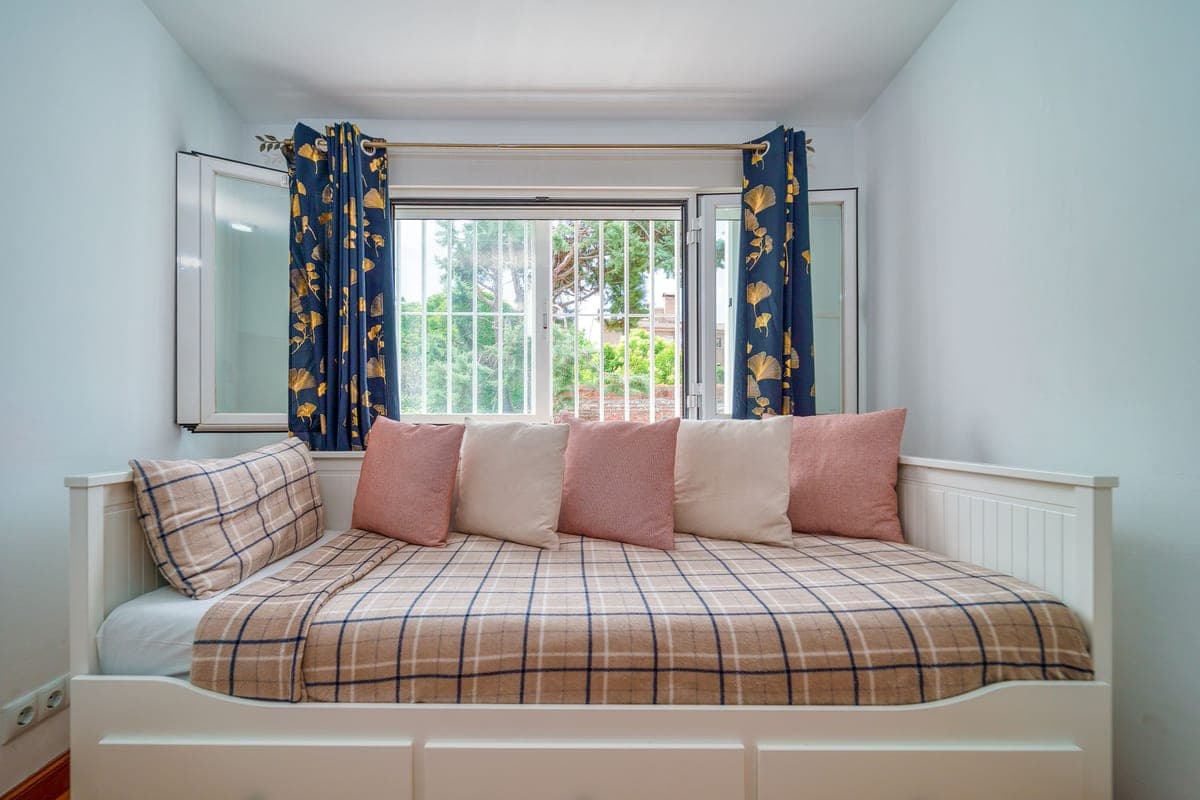
A daybed is a twin bed with a back and two sides. That is all it is, and it is the most reliable format on this site by a distance: no fold seam, no crossbar, no pistons, no straps, nothing to fail. It takes a conventional, non-folding mattress at whatever depth the frame allows, which means the sleeping surface is as good as the mattress you buy rather than as good as the mechanism permits.
The honest drawback is that it looks like a bed, because it is one. A daybed in a living room reads as a bed with cushions on it, and no amount of styling fixes that. So the decision is really about whether the room can accept a bed in it permanently — which a guest room, a home office or a spare room usually can, and a living room usually cannot.
Read both capacities — the trundle is always lower
- Novogratz Bushwick (twin/twin)
- Daybed 400 lb · trundle 250 lb · 8 in. maximum mattress
- DHP Manila (twin/twin)
- Daybed 400 lb · trundle 225 lb
- Novogratz Bright Pop (full/twin)
- Daybed 400 lb · trundle 250 lb · 69.5 lb frame
- DHP Manila (queen/full)
- Daybed 500 lb · trundle 450 lb · 84 × 63 in.
- DHP Kayden wood (twin)
- 225 lb, no trundle, 34 in. tall
The category divides on two axes. Material: powder-coated tube steel is light and cheap — 59 to 87 pounds — and it creaks, because slats move against the frame and every one of them does it; wood is quieter, usually lower, and usually lighter-duty. Trundle or not: a trundle is a second bed on castors, and it is rated separately from the daybed and always lower, often by half.
What decides price is mostly frame size and capacity, and the thing to budget for is not the frame. A daybed does not come with a mattress, and neither does the trundle — so the real purchase is a frame plus one or two mattresses, and the mattresses often cost more than the frame. An eight-inch memory foam on top and a six-inch innerspring below is the standard pairing.
The mistake buyers make is reading one weight limit. A 225-pound trundle is a child or a light adult, and presenting it as a second grown-up guest bed is the most common overstatement in this category — only the Manila queen/full at 450 pounds is genuinely rated for an adult underneath. The second mistake is not budgeting for a bolster: a daybed without a firm full-length bolster is a bed you sit on the edge of.