Skip to content

Guides / How-to

How to Make a Daybed More Comfortable

Sleeping on a daybed is already solved by the mattress. Sitting on one is not, and there is exactly one thing that fixes it.

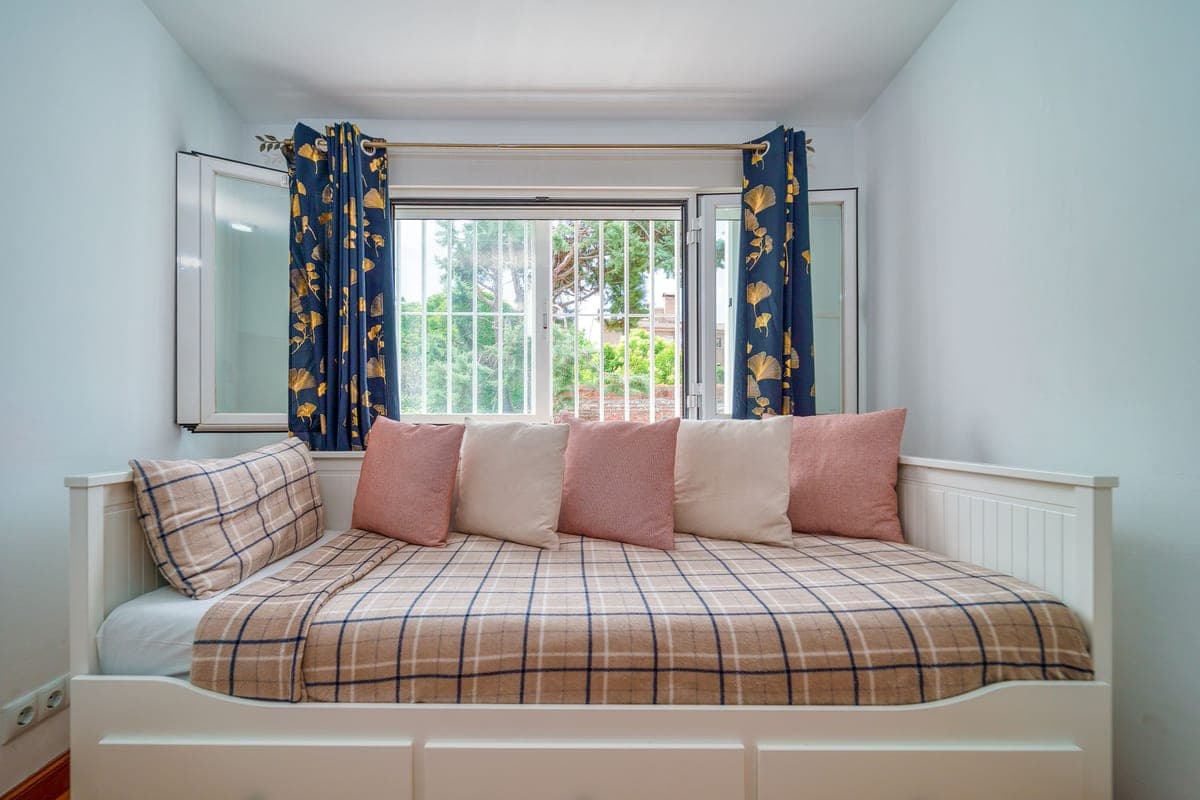
A minimal bedroom with a low daybed and cushions arranged against the wall

A daybed has no mechanism, so there is no seam and no crossbar. Sleeping comfort is entirely a function of the mattress you chose, which makes it the easiest format on this site to get right and the one where people most often get the other half wrong.

Sitting is the problem. A daybed is about 41 inches deep with a mattress in it; a sofa seat is 20 to 22 inches. So you either perch on the front edge with no back support, or sit back with your legs off the floor. There is exactly one thing that fixes this properly.

1. One firm bolster, full length — this is the whole answer

A single firm bolster, 16 to 20 inches deep, running the entire length of the back. That reduces the effective seat depth from about 41 inches to 21 to 25 inches, which is sofa range, and it gives you a back to lean against.

Firm, not soft. A soft bolster compresses under a shoulder and you end up at 35 inches of seat depth again. Upholstery-grade foam, not fiber fill.

Full length, not two cushions. Two cushions leave a gap in the middle, which is where people sit.

Not scatter cushions. This is the most common mistake in the category. Scatter cushions slide out from behind your back, you rearrange them, and the result is worse than nothing because you never stop fiddling with them.

Budget for it at purchase

A daybed without a bolster is a bed you sit on the edge of. Buy the bolster at the same time as the frame, not six months later.

2. Match the mattress depth to the side rails

A daybed has fixed side rails, and the mattress should come to roughly their inside height. Deeper and the mattress slides, because nothing is containing it. Much shallower and the daybed reads as a box with a pad in it.

Eight inches is the number that lands correctly on most frames, and it is deep enough for a real four-inch high-density base under the comfort layers. The Novogratz Bushwick publishes 8 inches as its maximum, which is the only stated limit we found in the category.

Check the capacity in twin specifically. Zinus rates its eight-inch at 250 pounds in twin against 500 in every larger size, and twin is exactly what a daybed takes. Full detail in the best daybed mattresses.

3. Deal with the creak, because every metal frame has one

Powder-coated tube frames with slats move against each other, and an adult’s weight makes it audible. None of the listings mentions this and all of the frames do it.

Two things that genuinely help. Tighten every bolt after the first week of use — they work loose as the frame settles, and a loose joint is where the noise comes from. And put self-adhesive felt pads where the slats contact the frame rails, which removes the metal-on-metal.

A wood frame is quieter and usually lighter-duty: the DHP Kayden is 34 inches tall with wood slats and rated 225 pounds against 400 for the metal frames.

4. The back rail at shoulder height

On a 40-to-41-inch frame, lying on your side facing the back puts your face close to a metal rail. Guests notice and do not mention it.

The bolster solves this too, if it is full length — which is another reason not to use scatter cushions, because they leave the rail exposed wherever they are not. A long body pillow along the back works as a stopgap.

A lower frame avoids it entirely. The Kayden at 34 inches puts the rail below shoulder height for most people lying down.

5. The side table problem

A daybed has arms at both ends, so a bedside table cannot sit beside the pillow. There is nowhere to put a glass of water, which is a small thing that guests remember.

A small stool or a C-table that slides under the frame at the open end works better than a proper nightstand. A clip-on lamp on the back rail solves the other half of the same problem, since guest rooms overwhelmingly have one ceiling light and one switch by the door.

If there is a trundle, the trundle is where the bedding lives when it is not a bed. If there is not, a flat box under the frame beats a shelf across the room.

Some links on this page are affiliate links. If you buy through one we may earn a commission at no extra cost to you, and it does not change what we recommend or how we rank it. Full disclosure.

At a glance

What the sleeping fix needs

Tap any row to jump to the full write-up. Scores are our own, from the rubric on how we choose — not customer ratings.

#ProductBest forScorePrice
01
A small guest bedroom with a neatly made bed against a pale wallIllustrative

Zinus 8 Inch Green Tea Memory Foam Mattress

Two inches of memory foam, two of comfort foam, four of base — the standard answer for a daybed or trundle that needs a real mattress under 10 inches.

Daybeds and trundles8.0
Check price on Amazon

#ad how we earn · we do not print prices

02
A single bed dressed in bedding with storage space beneath the frameIllustrative

Linenspa 6 Inch Innerspring Mattress

Six inches of heavy-gauge steel coils under a quilted cover — the budget mattress that fits a trundle drawer without jamming it.

—7.0
Check price on Amazon

#ad how we earn · we do not print prices

How we picked

Two mattresses, because on a daybed the sleeping side of comfort is entirely a mattress question and the sitting side is entirely a bolster question — and a bolster is not a product we can responsibly rank from specifications. One eight-inch for the top bed, one six-inch for a trundle tray.

Daybeds and trundles

Zinus 8 Inch Green Tea Memory Foam Mattress

Zinus
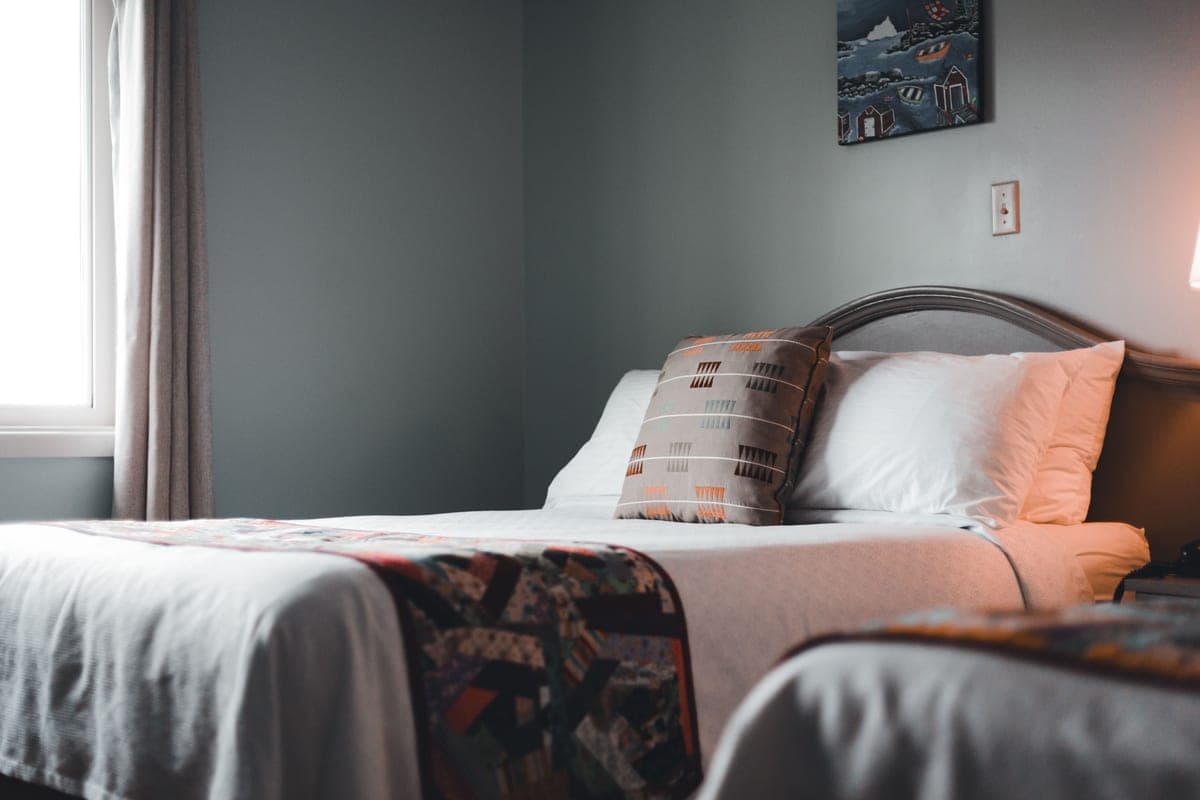
A small guest bedroom with a neatly made bed against a pale wallIllustrative — category photo, not this unit

Two inches of memory foam, two of comfort foam, four of base — the standard answer for a daybed or trundle that needs a real mattress under 10 inches.

What it's bad at

The twin is rated to 250 lb where every other size is 500 lb, which matters because twin is exactly the size daybeds take.

Our score — 8.0 / 10

Comfort8
Depth7
Foldability1
Weight6
Value9
Check price on Amazon →

#ad how we earn · we do not print prices

Specifications

Folded footprint
Ships compressed and rolled in a box
Open footprint
Standard mattress sizes, 8 in. deep
Clearance in front
Not applicable — mattress.
Doorway minimum
Ships rolled, so any doorway
Sleep surface
Standard Twin through King
Mattress
8 in.; 2 in. memory foam + 2 in. airflow comfort foam + 4 in. high-density base
Fold mechanism
None — does not fold
Weight capacity
250 lb in Twin; 500 lb in all other sizes
Assembly
None. Expands in a few hours, settles within 48.
Renter-safe?
Yes
Price
Check price on Amazon

Source: Manufacturer listing, zinus.com, plus the Amazon.com product page, recorded 27 Sep 2026. Any field the listing does not state is marked as such rather than estimated.
Linenspa 6 Inch Innerspring Mattress

Linenspa

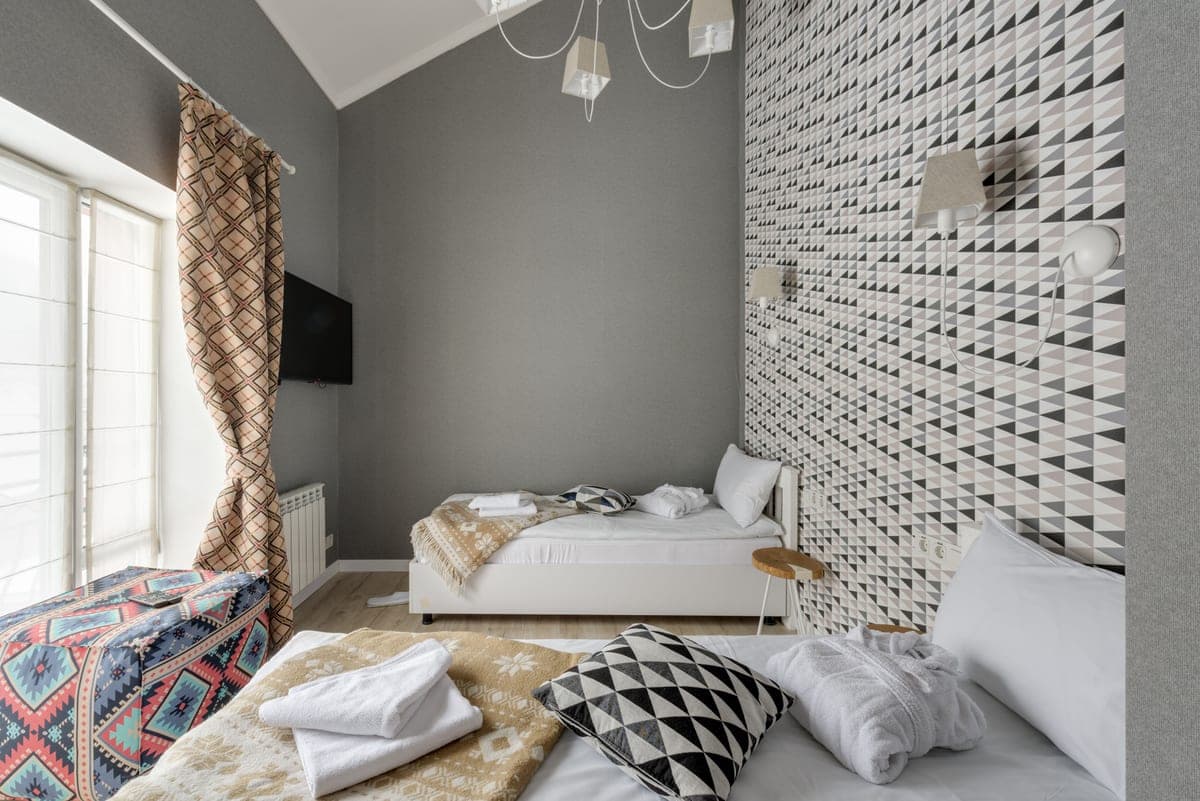
A single bed dressed in bedding with storage space beneath the frameIllustrative — category photo, not this unit

Six inches of heavy-gauge steel coils under a quilted cover — the budget mattress that fits a trundle drawer without jamming it.

What it's bad at

Firm, and firm is the polite word. It is a guest-frequency mattress, not something to put an adult on five nights a week.

Our score — 7.0 / 10

Comfort5
Depth5
Foldability1
Weight8
Value10
Check price on Amazon →

#ad how we earn · we do not print prices

Specifications

Folded footprint
Ships compressed and rolled
Open footprint
6 in. deep; standard mattress widths (Twin XL listed at 39 x 80 in.)
Clearance in front
Not applicable — mattress.
Doorway minimum
Ships rolled, so any doorway
Sleep surface
Standard sizes
Mattress
6 in.; heavy-gauge steel coils under a quilted cover with a foam comfort layer
Fold mechanism
None — does not fold
Weight capacity
NOT STATED BY MANUFACTURER
Assembly
None. Decompresses over 24 to 72 hours.
Renter-safe?
Yes
Price
Check price on Amazon

Source: Brand listing via homedepot.com and the Amazon.com product page, recorded 27 Sep 2026. Any field the listing does not state is marked as such rather than estimated.

Answers

Common questions

How do you make a daybed comfortable to sit on?
One firm bolster, 16 to 20 inches deep, running the full length of the back. That reduces the effective seat depth from about 41 inches to sofa range and gives you back support. It must be firm upholstery foam rather than fiber fill, and it must be full length — scatter cushions compress and slide out.
What kind of cushions do you use on a daybed?
One long firm bolster for the back, and decorative cushions only in addition to it. Using scatter cushions as the back support is the commonest daybed mistake: they compress under a shoulder, slide out, and leave you rearranging them all evening.
How thick should a daybed mattress be?
Eight inches on most frames, matched to roughly the inside height of the side rails. Deeper and it slides because nothing contains it; much shallower and the daybed reads as a box. The Novogratz Bushwick publishes an 8-inch maximum, which is the only stated limit we found in the category.
How do you stop a metal daybed creaking?
Tighten every bolt after the first week — they work loose as the frame settles, and a loose joint is the noise. Then put self-adhesive felt pads where the slats contact the frame rails to remove the metal-on-metal. A wood frame is quieter and usually lighter-duty.
Can a daybed be as comfortable as a normal bed?
To sleep on, yes — it takes a conventional non-folding mattress with no fold seam and no crossbar, so it is as good as the mattress you buy. The differences are width (a twin is 38 inches) and the side rails, which put the bedside table beyond the end rather than beside the pillow.

Sources

Keep reading